
Live work · Built by Neurvana AI
Prospecting & Validation
The system Neurvana uses to reach local businesses. Each lead is checked against the business's own website, the first email is written from what the site says, and replies, bounces and follow-ups are tracked for you. A person approves every batch and starts every send.
In use at Neurvana AI since September 2026
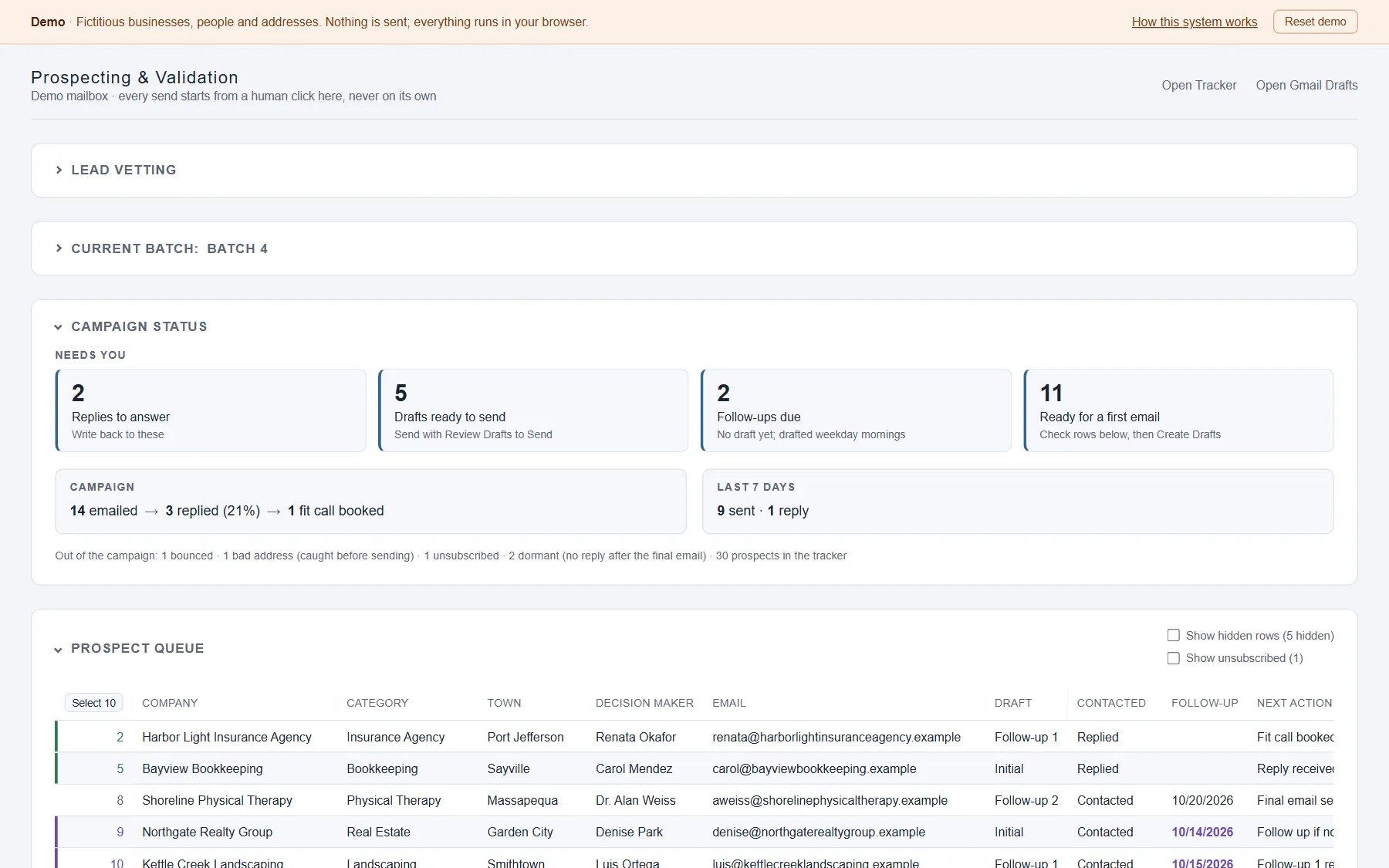
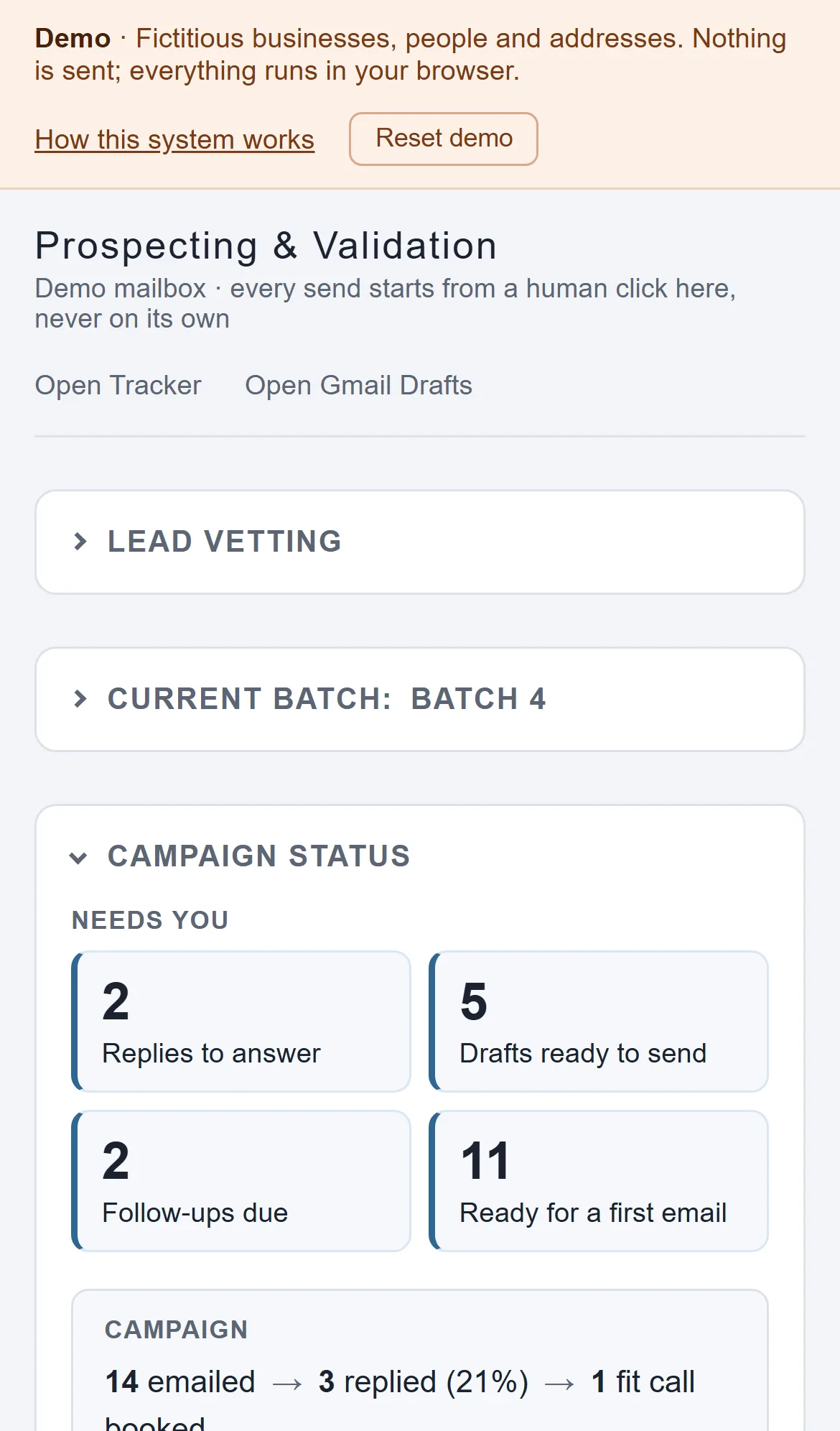
Screens show the demo dashboard with fictitious businesses, people and email addresses.
Cold outreach is either generic or slow
Writing to local business owners works when the email shows you looked at their business. Doing that by hand for every lead takes hours, and blasting a template gets ignored or marked as spam.
- Lead lists are full of businesses that closed, moved, grew too big or never had a real address.
- A good first email means reading each business's website first.
- Follow-ups depend on someone remembering, on the right day, in the right thread.
- Replies, bounces and unsubscribes get lost between the inbox and the spreadsheet.
How it works
From a list of leads to real conversations
The system does the reading, writing and record keeping. A person makes the decisions. These screens are the demo dashboard, running on fictitious businesses.
-
1
Every lead is checked first
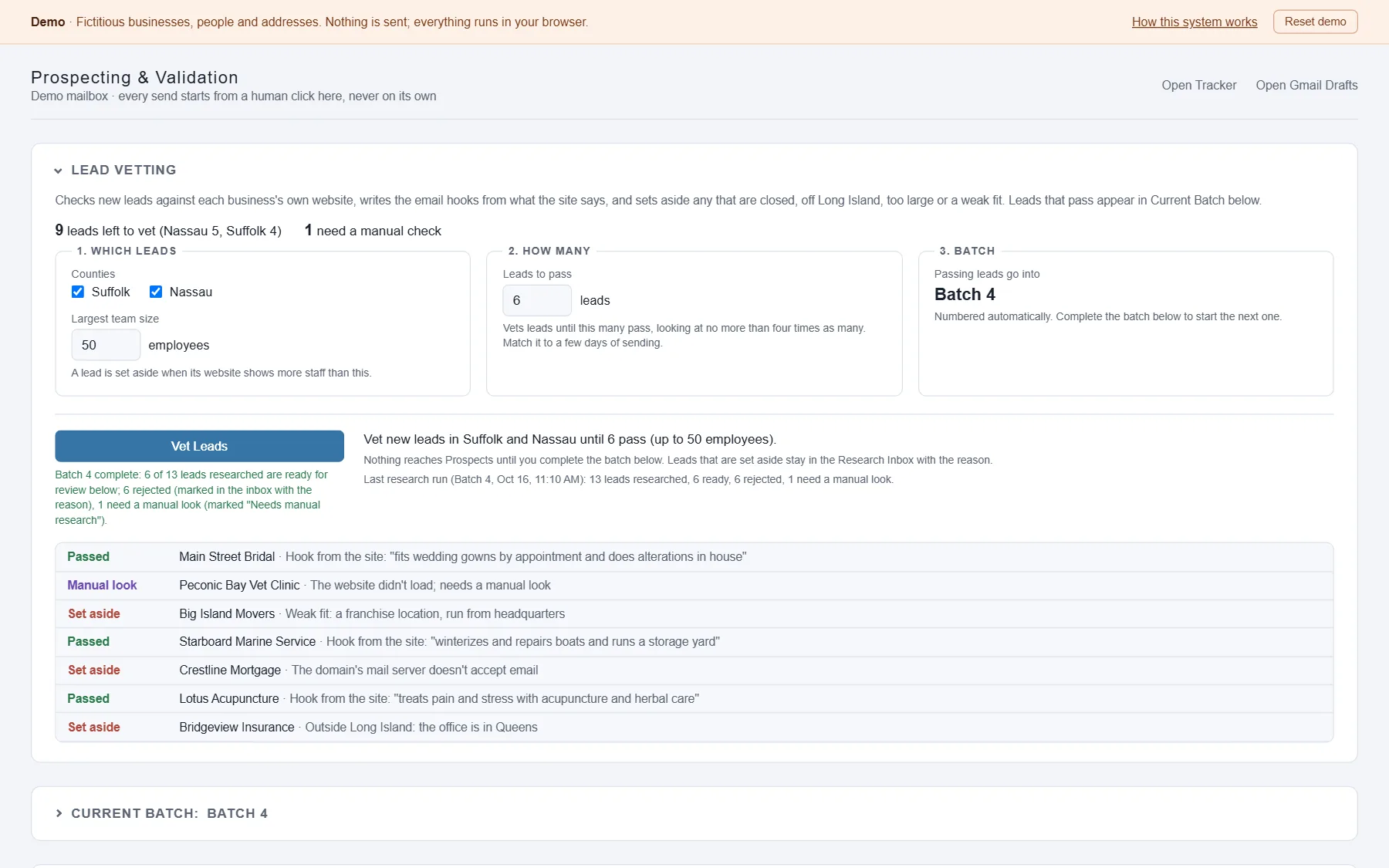
For each new lead, the system reads the business's own website. It sets aside businesses that have closed, are off Long Island, are larger than the size you pick, or are a poor fit, and checks that the email address can actually receive mail. For the ones that pass, it notes one fact from the site to open the email with, and the code confirms those words really appear on the site.
-
2
A person completes the batch
Leads that pass wait in a batch. Luke looks them over, unchecks any that don't fit, and completes the batch. Only then do they join the prospect list.
A person decides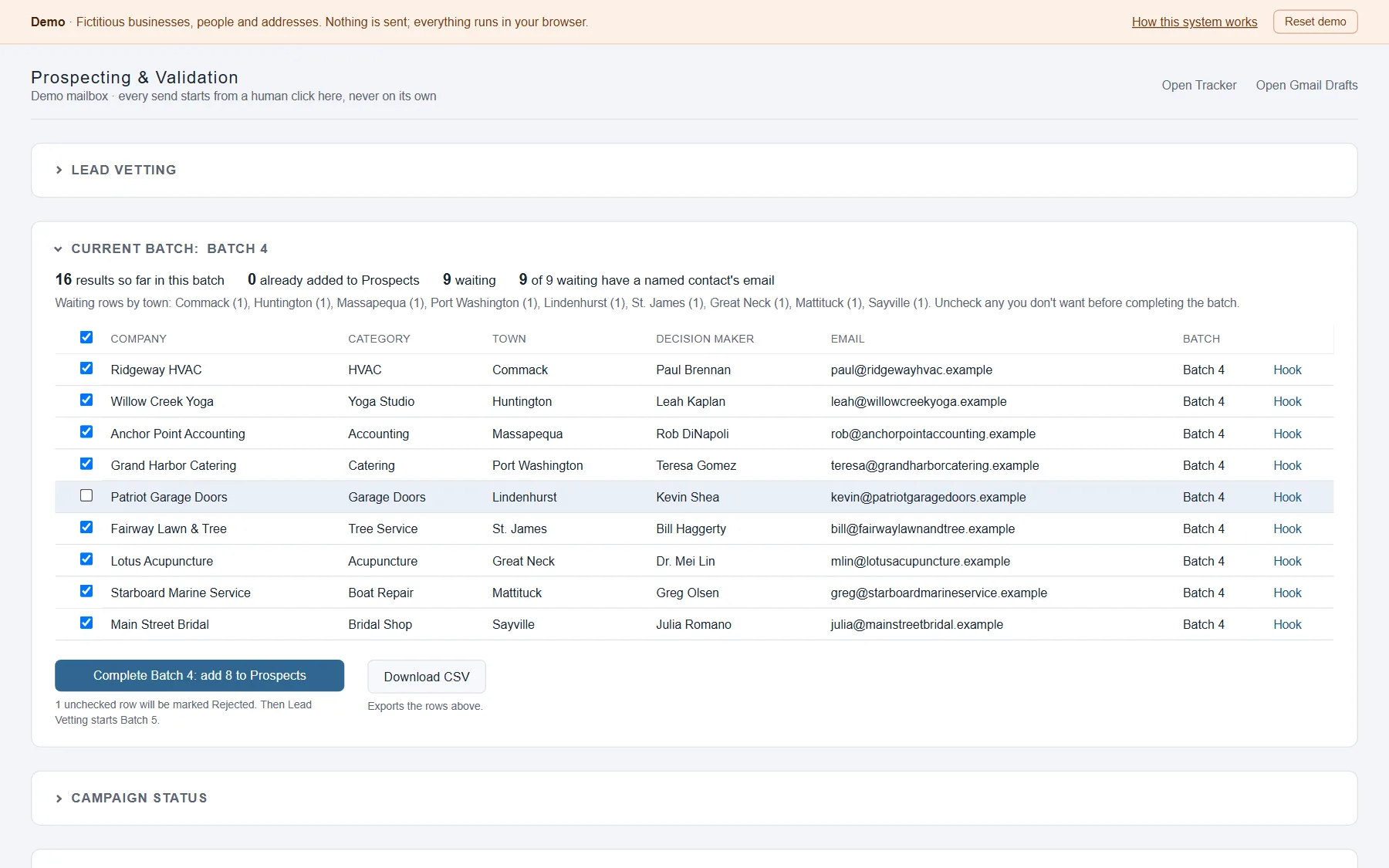
-
3
Drafts written from the business's own site
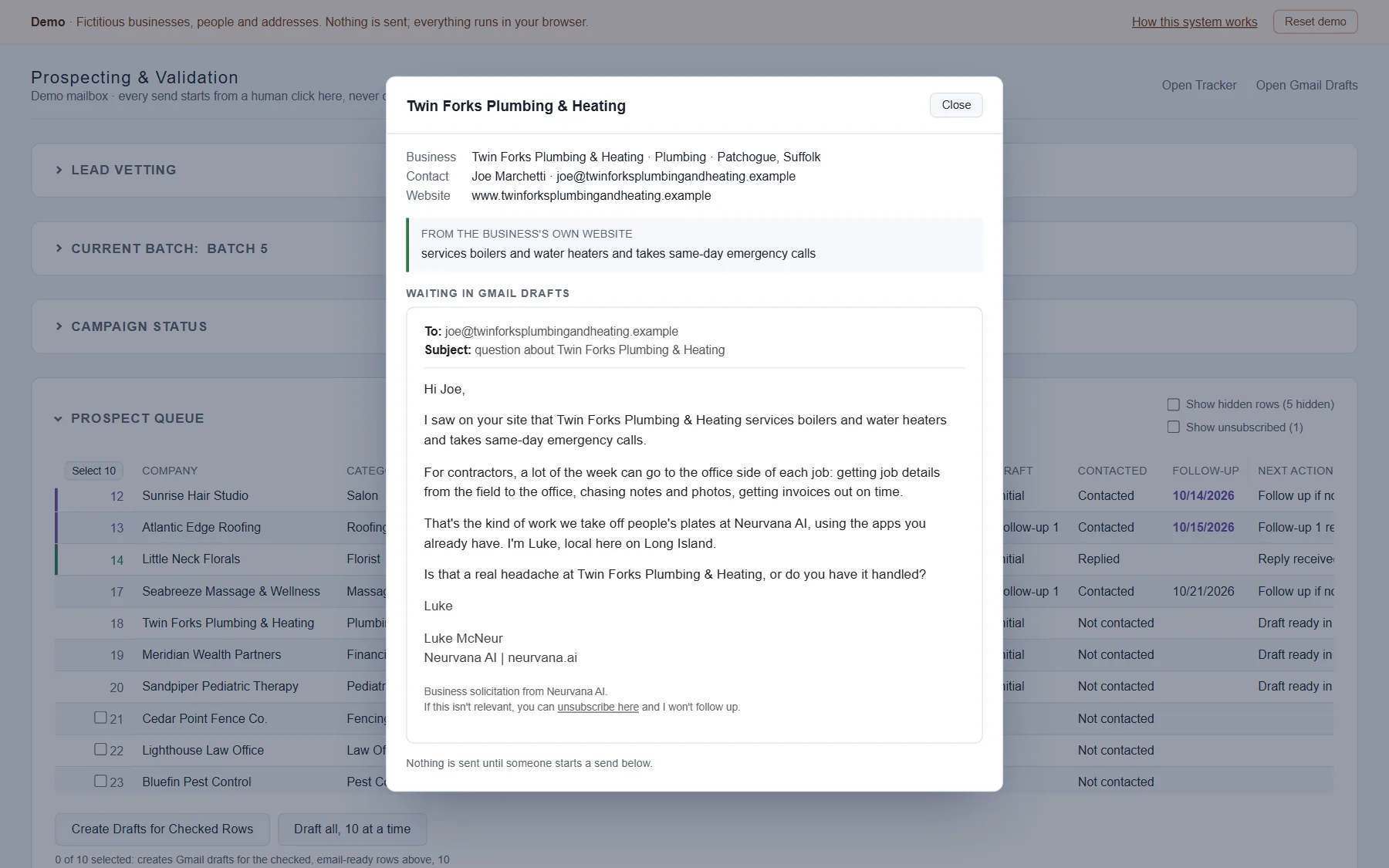
Ten at a time, the system writes a short first email for each prospect: the fact from their website, a line about the kind of busywork that fits their type of business, and a plain question. Each one lands in Gmail Drafts with an unsubscribe link. Nothing is sent.
-
4
One button sends, at a human pace
Sending is the one step that reaches anyone, and it only starts when Luke clicks it. Luke reviews the waiting drafts and picks how many go today, or schedules a start time. The emails go out one at a time, 45 to 90 seconds apart. A draft for someone who has since unsubscribed is skipped and deleted, and the rest of a send can be cancelled at any point.
A person starts every send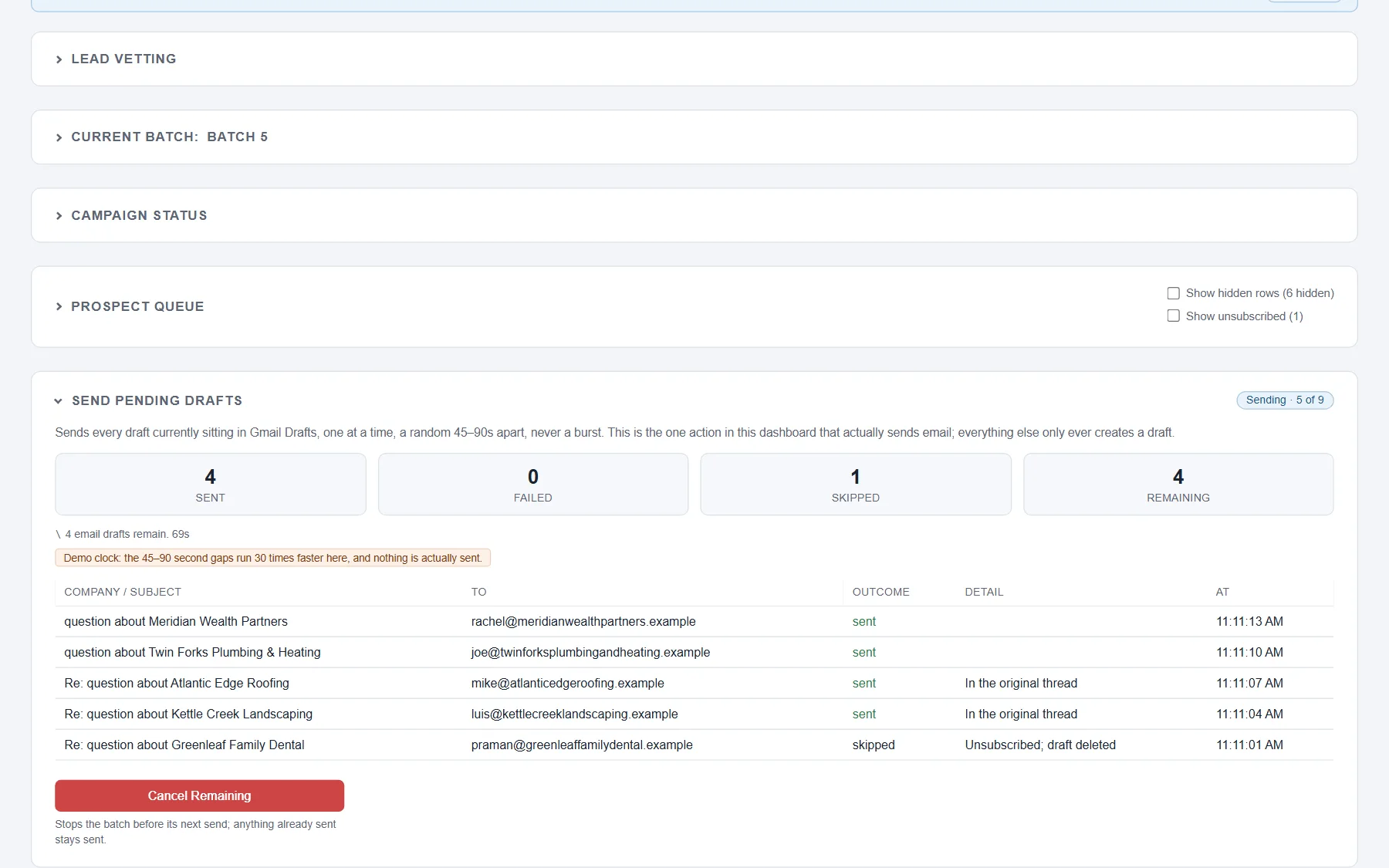
-
5
Replies, bounces and follow-ups take care of themselves
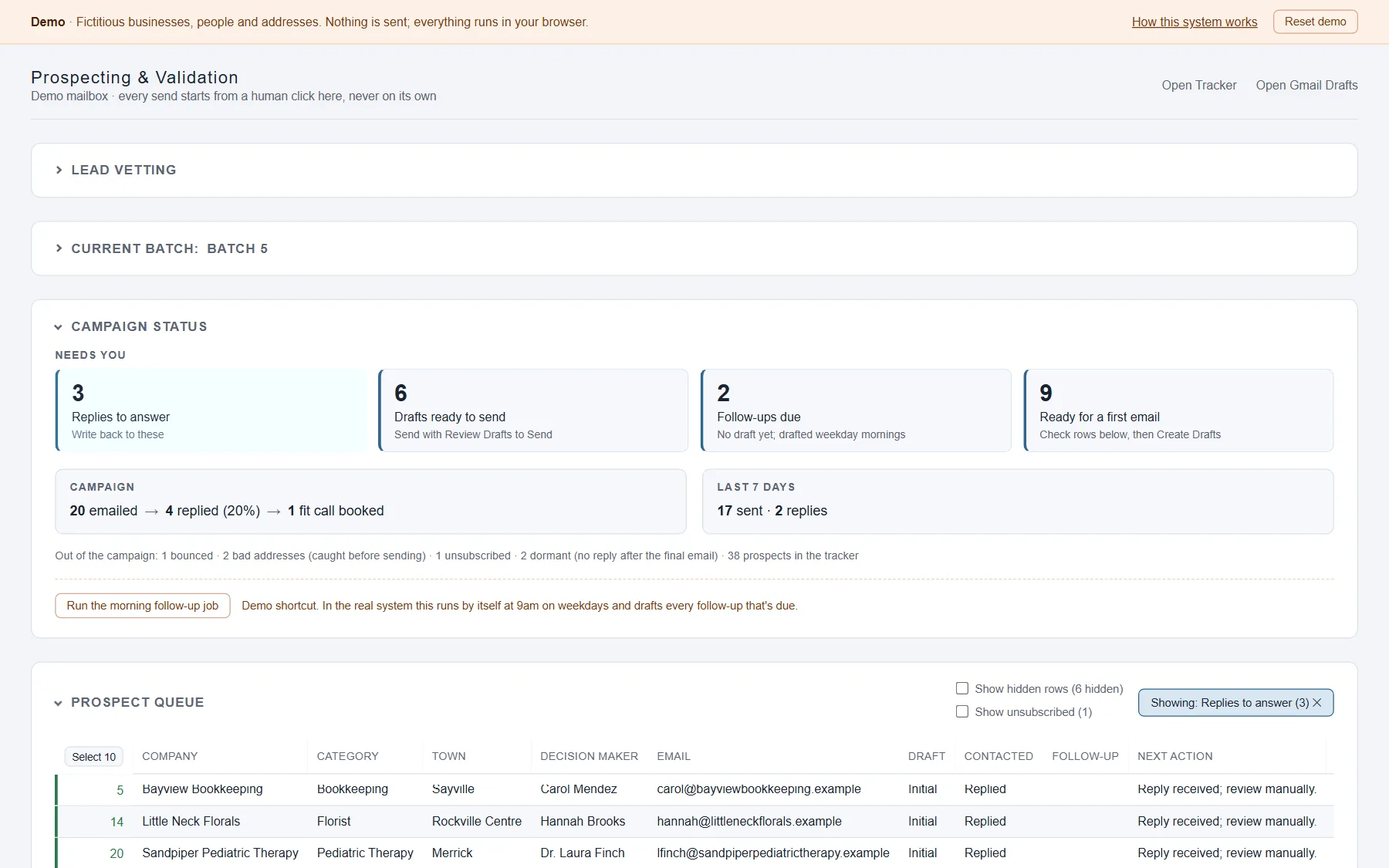
Every few minutes the system checks for sent mail, replies and bounces, and updates the record. A reply stops the follow-ups and appears under "Replies to answer." On weekday mornings it drafts the follow-ups that are due, in the same email thread, for Luke to send. After the final email with no answer, the lead rests instead of getting more mail.
Try it yourself
The real dashboard, with made-up businesses
This is a working copy of the dashboard Neurvana uses every week, filled with fictitious businesses. Everything happens in your browser, and nothing is sent.
- Vet a batch of leads and watch each one pass or get set aside.
- Complete the batch, then draft first emails ten at a time.
- Open any draft to see what it says and where its first line came from.
- Start a paced send, and see what happens when someone replies.
Built to stay personal and safe
A person starts every send
The system researches, writes and records. Only one button sends email, and only a person can press it.
It doesn't make things up
The opening line comes from the business's own website, and code checks the words are really there. With nothing usable, the email simply goes without that line.
Unsubscribes are honored everywhere
Every email has an unsubscribe link, and a reply that says stop counts too. That address is never drafted again, and any waiting draft is skipped.
Bad addresses are caught early
Each address is checked before a draft is made, and bounces are recorded, so the mailbox keeps a good reputation.
Paced like a person
Emails go out one at a time with random gaps, in small daily batches, never as a blast.
Runs on everyday tools
Gmail for the drafts, a Google Sheet for the record, and a dashboard on top. The record stays in a spreadsheet anyone can open.
- Gmail
- Google Sheets
- n8n workflows
- Firebase
- AI that reads each website
What we learned
Measure, then change course
The first version had AI search the web for businesses and find their owners' email addresses. Too many of those addresses were guesses, and guesses bounce. Bounces hurt a mailbox's reputation and every email after them.
So we changed the job. The system now starts from a list of real businesses and spends its effort checking each one against its own website. Fewer leads get through, and the ones that do are real.
That is how Neurvana works on any project: put it to real use, watch the numbers, and fix what they show.
Your business has work like this
This system is one example. If your team spends hours on research, data entry or follow-ups, we can build something that does the busywork and leaves the decisions to you.
 Luke McNeur, Founder, Neurvana AI · Proudly Veteran Owned